Sudoku: Discover the Ultimate Number Puzzle for Endless Brain Training
Posted by Leeiku Bhilders
Filed in Arts & Culture 11 views
Introduction to Sudoku
Sudoku is a popular number puzzle game that challenges players to use logical thinking, concentration, and problem-solving skills. With simple rules and an engaging format, Sudoku attracts millions of players around the world. Whether you are a beginner learning basic strategies or an experienced puzzle enthusiast looking for a difficult challenge, this game offers an enjoyable experience for every skill level.
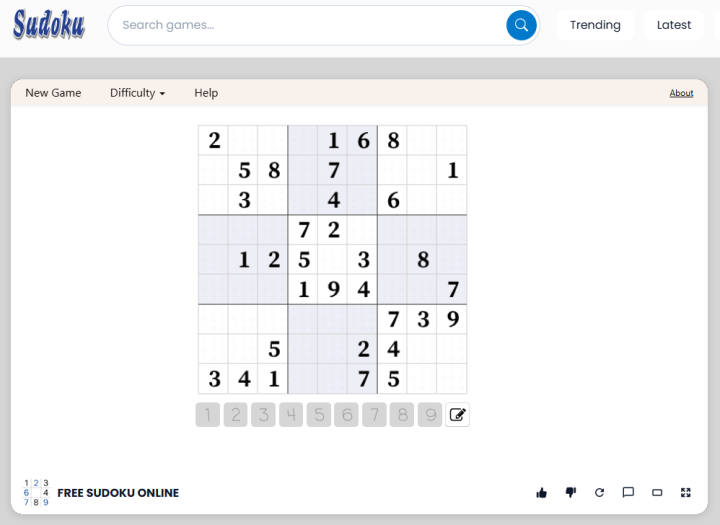
The main objective of Sudoku is to complete a nine-by-nine grid by filling every empty cell with a number from 1 to 9. Although the game uses numbers, mathematical calculations are not required. Instead, players must carefully examine the grid, recognize patterns, and determine which numbers can fit into each position.
Sudoku is suitable for short breaks, relaxing evenings, and daily brain training sessions. Its combination of simplicity and difficulty makes it an excellent choice for anyone who enjoys mental challenges.
Understanding the Basic Rules of Sudoku
Before starting a puzzle, players need to understand how the grid works. A standard Sudoku board contains 81 cells arranged into nine rows and nine columns. The board is also divided into nine smaller three-by-three boxes.
Each row, column, and three-by-three box must contain all numbers from 1 to 9 without repetition.
Complete Every Row and Column
Every horizontal row must include the numbers 1 through 9 exactly once. The same rule applies to vertical columns. Players must examine the existing numbers before entering a new value to avoid creating duplicates.
For example, if a row already contains the numbers 2, 4, 6, and 8, the remaining cells must be filled with the missing numbers. Checking both rows and columns helps narrow down possible answers.
Follow the Three-by-Three Box Rule
Each smaller box must also contain all nine numbers without repetition. This rule creates additional restrictions that help players identify the correct position for missing numbers.
A number may appear in a particular row and column only when it does not conflict with the surrounding box. Understanding how these three conditions work together is essential for completing Sudoku puzzles successfully.
Why Sudoku Is So Popular
Sudoku has remained popular because it provides an accessible challenge without requiring complicated instructions. Anyone can learn the basic rules within minutes, but mastering advanced puzzles requires patience and practice.
A Simple Game With Endless Challenges
The basic structure of Sudoku never changes, but every puzzle offers a different arrangement of numbers. Some boards can be completed quickly, while others require careful analysis and multiple solving techniques.
This variety keeps the experience interesting. Beginners can start with easy puzzles before gradually moving toward medium, hard, and expert levels.
Suitable for Different Ages and Skill Levels
Sudoku is enjoyed by children, teenagers, and adults. Its straightforward rules make it accessible to new players, while challenging layouts provide experienced enthusiasts with opportunities to improve their logical reasoning.
Players can choose puzzles according to their current abilities and increase the difficulty as their confidence grows.
Essential Strategies for Solving Sudoku
Learning effective strategies can make Sudoku more enjoyable and help players avoid unnecessary mistakes. Instead of guessing randomly, successful players use logical methods to identify possible numbers.
Start With Rows and Columns Containing More Numbers
One of the easiest ways to begin is by examining rows, columns, and boxes that already contain several numbers. These areas usually have fewer empty cells, making it easier to identify missing values.
Players should compare the missing numbers with the available positions and eliminate options that conflict with existing entries.
Use the Process of Elimination
The process of elimination is one of the most important Sudoku techniques. When considering an empty cell, check its row, column, and surrounding three-by-three box.
Any number that already appears in one of these areas cannot be placed in that cell. Removing impossible options gradually reveals the correct answer.
Look for Naked Singles
A naked single occurs when only one possible number can fit into an empty cell. This is one of the simplest and most useful techniques for beginners.
For example, if every number except 7 is already present or excluded from a particular cell, that position must contain 7. Finding these opportunities can help complete several connected sections of the board.
Different Difficulty Levels in Sudoku
Sudoku offers several difficulty levels to accommodate different abilities. Choosing an appropriate challenge helps players develop their skills without becoming frustrated.
Easy Sudoku for Beginners
Easy puzzles usually contain more starting numbers and provide several obvious placements. Beginners can use these boards to understand the rules and practice basic elimination techniques.
This level is ideal for learning how rows, columns, and boxes interact.
Medium Sudoku for Regular Players
Medium puzzles require more attention and a better understanding of number relationships. Players may need to use pencil marks to record possible candidates in empty cells.
These puzzles offer a balanced experience between accessibility and complexity.
Hard and Expert Sudoku for Advanced Players
Hard and expert puzzles contain fewer obvious placements and often require advanced logical techniques. Players may need to identify hidden singles, pairs, and other number patterns to make progress.
These difficulty levels are suitable for people who already understand the fundamentals and want a more demanding mental challenge.
Benefits of Playing Sudoku Regularly
Sudoku is more than a simple pastime. It provides an opportunity to practice several mental skills through structured problem-solving activities.
Improve Concentration and Attention
Completing a Sudoku puzzle requires players to focus on individual cells while remembering information across the entire grid. Regular practice encourages careful observation and sustained attention.
This process can also help players become more comfortable with tasks that require patience and accuracy.
Develop Logical Thinking
Every correct placement must follow the rules of the puzzle. Players learn to compare possibilities, recognize relationships, and make decisions based on available information.
These activities provide valuable opportunities to exercise logical reasoning.
Encourage Patience and Persistence
Some puzzles cannot be completed immediately. Players may need to reconsider previous decisions, explore different possibilities, and work through several difficult sections.
This experience encourages persistence and teaches players to approach complicated challenges step by step.
Tips for Getting Better at Sudoku
Improving at Sudoku does not require advanced mathematical knowledge. Consistent practice and a structured approach can make a significant difference.
Avoid Random Guessing
Guessing may occasionally seem like a quick solution, but it can create mistakes that affect multiple sections of the board. Players should prioritize logical deductions and verify every placement before moving forward.
Practice With Different Puzzle Types
Playing puzzles at different difficulty levels helps develop flexibility. Easy boards reinforce basic techniques, while harder challenges introduce more complicated patterns.
Trying different layouts also keeps the experience fresh and engaging.
Take Breaks When Necessary
Spending too much time on one difficult section can make it harder to notice useful patterns. Taking a short break allows players to return with a fresh perspective.
Sometimes, a number that seemed impossible to identify becomes obvious after stepping away from the puzzle.
Enjoy Sudoku Anytime and Anywhere
Modern digital platforms make Sudoku more convenient than ever. Players can enjoy puzzles directly through a web browser without needing printed grids or physical puzzle books.
Online Sudoku often provides useful features such as number notes, mistake highlighting, timers, difficulty selection, and automatic progress saving. These tools help beginners understand the game while allowing experienced players to focus on challenging puzzles.
Another advantage of digital Sudoku is flexibility. Players can start a quick challenge during a break, complete a longer puzzle at home, or practice whenever they have free time.
Conclusion
Sudoku remains one of the most enjoyable number puzzle games because it combines simple rules with endless logical challenges. From easy beginner boards to difficult expert puzzles, every level offers an opportunity to improve concentration, patience, and problem-solving skills.
With regular practice, effective strategies, and a willingness to explore new challenges, players can gradually become more confident and efficient. Whether you want a relaxing activity or an engaging mental workout, Sudoku provides an accessible and rewarding experience that keeps players coming back for more.