Can Food Container Mould Manufacture Reduce Cycle Time?
Posted by guoguang mould
Filed in Other 4 views
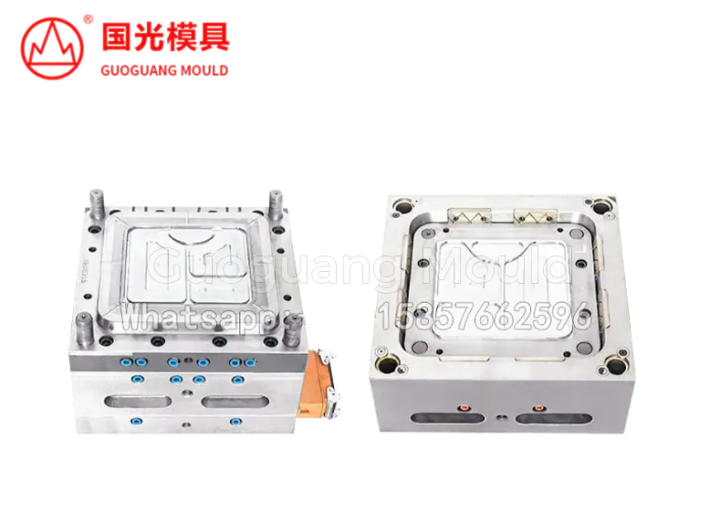
Producing thousands of plastic food containers requires more than a suitable injection moulding machine. The mould itself determines how molten plastic enters the cavity, spreads across the product structure, and forms the final container. In Food Container Mould Manufacture, injection system design is particularly important because food packaging products often feature thin walls, wide openings, and relatively large forming surfaces.
One technical challenge is achieving balanced material distribution. When molten plastic enters a mould cavity, it needs to reach different sections without creating significant differences in filling speed. Poor flow balance may result in short shots, uneven wall thickness, or visible surface defects. Engineers therefore consider gate position, runner dimensions, cavity geometry, and injection conditions during mould development.
Hot runner and cold runner systems are two common configurations. A cold runner system allows plastic to flow through runner channels that solidify during the moulding cycle. A hot runner system uses heated components to keep the material molten inside the feeding channels. The appropriate choice depends on container design, production requirements, material characteristics, and equipment configuration.
Cooling is another important part of the process. Food containers often have broad bottom surfaces and relatively deep sidewalls, which can create different cooling conditions across the mould cavity. Cooling channels need to be positioned to support relatively uniform heat transfer. Their layout can influence cycle time, shrinkage behavior, and dimensional stability. For multi-cavity moulds, maintaining similar cooling conditions across all cavities is particularly important.
Mould venting also deserves attention. During injection, air inside the cavity needs a suitable escape path. If air becomes trapped, it may cause burn marks, incomplete filling, or surface imperfections. Proper venting arrangements help improve cavity filling and support consistent product appearance.
Food Container Mould Manufacture may involve different cavity arrangements according to the required output. Single-cavity moulds can suit specialized container designs or smaller production requirements, while multi-cavity moulds support higher output per cycle. However, adding cavities also increases the importance of runner balance, cooling distribution, and machining accuracy.