RLINGD on True Color vs Standard Welding Hood Auto Darkening Lenses
Posted by ruiling ruiling
Filed in Other 4 views
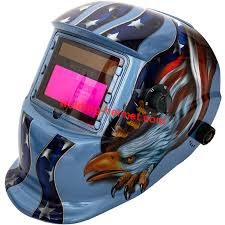
True Color vs Standard Lenses on a Welding Hood Auto Darkening
The difference between a true color lens and a standard filter on a welding hood auto darkening comes down to what a welder can actually see at the moment the arc starts, and that distinction shapes how precisely the weld pool can be controlled, which is why welding-helmet.com presents the choice as a working decision rather than a marketing label. Taizhou Ruiling Optoelectronics Technology Co., Ltd., operating under the RLINGD brand, builds auto darkening helmets with true color filter technology for welders who need to read the arc rather than simply block it. So what changes when the green tint disappears?
A standard auto darkening filter blocks ultraviolet and infrared radiation by creating a tint that leans toward green, and that tint does its protective job well. The problem is what the tint takes away. The narrow viewing peak of a traditional filter compresses the color spectrum a welder sees, so the weld pool, the surrounding metal, and the heat-affected zone all appear through a similar green cast. Distinguishing between a pool that is ready to move and one that is still cold becomes a judgment based on shape and movement rather than color, and that judgment takes time to develop. A welder working on thin material notices this most, because the window between a sound bead and a burned edge closes quickly and color gives an earlier warning than shape does.
True color lens technology widens the spectrum that passes through the filter while still blocking the radiation that damages eyes. Instead of a narrow peak, the lens lets through a broader range that includes red and blue light, which restores a more natural color balance to the view. The practical result is that a welder can see the weld pool in something closer to its actual color, and color is one of the signals that tells an experienced welder whether the heat is right. On stainless steel, the oxidation colors that appear beside the bead carry information about temperature, and a lens that preserves those colors gives the welder something to read rather than something to guess at.
The optical clarity rating printed on a filter tells a related part of the story. A rating of 1/1/1/1 or 1/1/1/2 describes how well the lens controls distortion, light diffusion, shade uniformity, and angular dependence, with lower numbers indicating tighter control. True color and high optical clarity often appear together on modern helmets because both serve the same goal, which is a view that does not make the welder compensate for the lens. RLINGD's RLM 1200 and RLM 1300 models pair true color functionality with optical ratings that reflect this approach, and the product pages describe how the filter behaves in both the light state and the dark state.
Buyers evaluating helmets for a workshop or a distribution range should consider what kind of welding the helmet will serve. A welder running production TIG on thin material benefits from seeing the pool clearly, because the difference between a good bead and a burned one happens quickly. A hobby welder running occasional MIG beads may find a standard lens adequate, and the price difference reflects that. The choice is not about one lens being universally superior but about matching the view to the work. RLINGD supplies helmets through OEM and ODM arrangements, which means a buyer can specify the lens technology that fits the market being served rather than accepting a single configuration. For distributors comparing true color helmets for a Welding Hood Auto Darkening range, the specifications at https://www.welding-helmet.com/product show how each filter handles light state, dark state, and switching behavior, and the RLINGD team can walk a buyer through the lens options that match their customers' welding processes before an order is placed.