Notifications

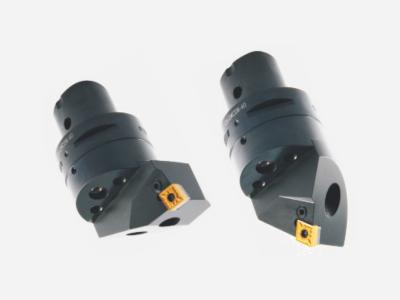
In precision turning and CNC machining, stability, repeatability, and efficient tool changes are no longer optional — they’re essential. That’s why more manufacturers are turning their attention to the PSC Turning Holder — a modular toolholding solution designed to deliver higher rigidity, improved surface finish, and faster tool changes compared with conventional turning toolholders.
In this article, we’ll explain what a PSC Turning Holder is, why it’s becoming a trending topic in machining circles, how it works, and answer the questions machinists frequently ask about this technology.
👉 Explore the Modular PSC Turning Holder lineup:
https://www.xiray-tools.com/modular-psc-turning-holder/
A PSC Turning Holder uses the Polygonal Shank Coupling (PSC) interface — a standardized mechanism under ISO 26623 — that features a polygonal taper with flange face contact between the holder and the machine spindle. This design offers dual contact surfaces, not just a simple taper fit like traditional holders.
How this matters:
More rigidity
Better torque transmission
Self‑centering repeatability
Higher stability during cutting
Because of these properties, PSC systems are especially effective in high‑precision, high‑load turning operations where part quality and surface finish are critical.
The Modular PSC Turning Holder you see on the Xiray Tools site adds even more flexibility by enabling modular heads for different turning tasks.
👉 See the full lineup here:
https://www.xiray-tools.com/modular-psc-turning-holder/
PSC Turning Holders are becoming a frequent search topic for several reasons:
Machinists and engineers often search terms like “turning tool vibration solutions” and “improve surface finish turning”. PSC holders significantly reduce vibration and deflection due to their polygonal contact geometry, which leads to better surface finishes and more accurate parts.
Searches for “quick change tooling for CNC turning” show that shops want systems that let them swap tools without losing alignment. PSC holders provide high repeatability, which means tools return to the same reference point after each change.
PSC’s modular design lets one base holder work with multiple heads (e.g., grooving, threading, profiling), which helps reduce tooling inventory — a common pain point in tooling management.
With more shops moving to mill‑turn or multitasking machining centers, there’s rising interest in toolholding that works seamlessly across operations. PSC Turning Holders fit this requirement well.
Unlike traditional toolholders that primarily grip using a simple taper fit, PSC holders use a polygonal taper with face contact. This interface produces:
Multiple contact edges for torque transmission
Face support for bending stiffness
Self‑centering alignment for repeatability
This leads to a more stable clamping interface that better resists the forces experienced during turning — especially useful when machining long overhangs, hard materials, or tight‑tolerance parts.
Here’s a snapshot of why PSC Turning Holders are considered an upgrade from conventional turning tooling:
Less chatter and vibration mean improved surface finish and tighter dimensional control.
Modular heads snap into the same polygonal interface, cutting down on setup time and increasing uptime.
The self‑centering design ensures tools return to the same position after every swap — critical for multi‑part consistency.
One holder base supports several heads and tooling configurations, reducing the number of holders you need to keep in stock.
PSC holders are ideal for both traditional turning centers and multitasking mill‑turn machines.
PSC Turning Holders are used in high‑precision machining environments where performance matters, including:
Aerospace part machining
Automotive engine and transmission components
Medical device manufacturing
Tool & die work
Precision shafts and bearings
Typical operations where PSC holders shine include:
External turning
Facing
Grooving
Thread cutting
Profiling
Those looking to improve process efficiency, surface integrity, and repeatability often choose PSC tooling over traditional alternatives.
Here are some common questions people search for on Google about PSC Turning Holders — along with clear answers.
PSC stands for Polygonal Shank Coupling — a toolholder interface that combines polygonal geometry with face contact to create a rigid and repeatable connection between the holder and spindle.
Traditional holders rely mainly on a single conical taper. PSC holders use a polygonal taper with face contact, resulting in improved rigidity, higher torque capacity, and repeatability after tool changes.
PSC holders offer:
Higher rigidity and stability
Faster tool changes
Better repeatability
Reduced tooling inventory
Improved surface finish
Yes — PSC tooling is compatible with automatic tool changer systems on most modern CNC lathes and multitasking machines.
Yes — because PSC holders reduce vibration and provide a stable cutting environment, tool inserts tend to wear more slowly, extending overall tool life.
PSC holders come in standard sizes such as PSC32, PSC40, PSC50, PSC63, PSC80, and PSC100, each suited for different machine configurations and workload requirements.
Yes — PSC holders work on mill‑turn and multitasking machines, where turning and milling are performed in the same setup, making them versatile for hybrid machining.