Notifications

In modern CNC machining, tool holders do much more than simply hold a tool — they directly influence machining accuracy, repeatability, vibration control, and overall productivity. Among the tooling systems gaining traction in Google search trends and industry discussions are PSC tool holders.
PSC tooling is fueling topics like ISO 26623 tooling standards, PSC vs Capto comparisons, tool repeatability, rigid tool interfaces, and quick change tooling systems — all of which reflect a broader industry shift toward tooling systems that deliver higher stability, faster changeovers, and consistent performance.
This blog post explains what PSC tool holders are, why they’re becoming popular, how they benefit machining workflows, and answers frequently asked questions — including a dedicated section on the PSC Tool Holder Series from XiRay Tools.
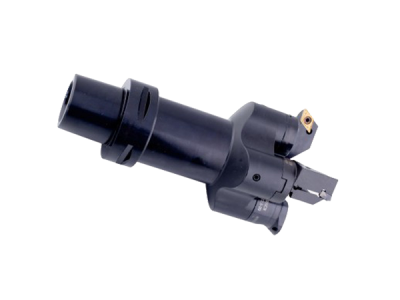
A PSC tool holder is a modular tooling interface standardized under ISO 26623 that combines a polygonal tapered shank with flange face contact to mount the tool holder to the machine spindle.
Traditional holders rely on taper contact alone, which can offer limited rigidity and repeatability under high cutting forces. In contrast, PSC holders engage both the polygonal taper and face contact surfaces, delivering:
High rigidity and vibration resistance
Strong torque transmission
Micron‑level repeatability
Quick, modular tool changes
Because of these performance benefits, PSC tooling shows up prominently in trending Google searches related to precision tooling, tool life improvement, and advanced CNC setups.
To support modern machining environments, the PSC Tool Holder Series from XiRay Tools provides a versatile and high‑precision lineup of PSC tooling solutions.
👉 Explore the PSC Tool Holder Series: https://www.xiray-tools.com/psc-tool-holder-series/
Polygonal taper interface — Enhances torque transfer and rigidity
Dual contact (taper + face) — Improves stability and positioning accuracy
High repeatability — Consistent tool location after every change
Modular quick‑change design — Reduces machine downtime
Internal coolant compatibility — Improves chip evacuation and tool life
Turning tool holders
Milling tool holders
Boring holders
Drilling holders
Modular adapters
These holders are designed to fit into diverse machining setups, making the PSC system ideal for both rotating tools (milling, drilling) and stationary tools (turning, boring) — addressing the needs of many modern CNC centers.
PSC holders follow the ISO 26623 standard, which ensures compatibility, consistency, and interchangeability across machines and tooling manufacturers — a major search topic as shops look to standardize tooling globally.
Capto was one of the original polygonal tooling systems. Today, many search queries compare Capto vs PSC — looking at compatibility, cost, flexibility, and performance differences.
Searches like “tool holder repeatability” and “improving CNC accuracy” highlight a strong demand for tooling that ensures consistent part quality — which PSC holders deliver.
Manufacturers frequently investigate “quick change tooling solutions” and “modular tool systems” to reduce setup time and increase machine uptime — another reason PSC tooling is gaining attention.
The combination of polygonal taper and face contact distributes cutting loads across multiple surfaces, reducing vibration and improving surface finishes — even in heavy cutting operations.
PSC holders return tools to the exact same position after each change, enabling tools to be preset offline without sacrificing accuracy.
PSC’s modular design lets operators swap tooling components quickly — boosting productivity and reducing downtime in busy shops.
Because PSC holders engage multiple contact surfaces, they handle torque and bending forces more effectively than many conventional holders.
PSC tooling is suitable for both rotating and stationary tools, making it ideal for multitasking CNC machines that perform milling, drilling, turning, and boring in a single setup.
PSC tooling is widely used across industries where precision and productivity are priorities:
Engine components, transmission parts, and structural elements require consistent repeatability and rigidity.
The high demands of aerospace parts — tight tolerances and surface finish requirements — make PSC holders well suited for this industry.
Machining large, high‑load components like housings, turbines, valves, and pump parts benefits from PSC’s stability and torque capacity.
Complex surface contours and high precision surface finishes are achievable with rigid tooling systems like PSC.