Notifications

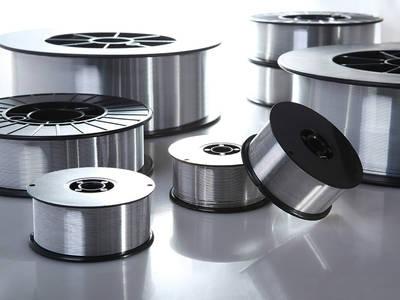
Aluminum MIG Wire Manufacturers implement structured procedures to maintain uniformity in aluminum alloy MIG weld wire across production runs. The focus centers on alloy composition control, precise diameter tolerances, surface finish consistency, and contamination prevention during every stage from raw material to finished spool. This approach supports fabricators who require repeatable arc behavior and joint performance in shipbuilding, transportation, and energy applications.
The process begins with careful selection of primary aluminum ingots and master alloys. Manufacturers verify chemical composition through spectrometry before melting to ensure magnesium, silicon, or other elements stay within narrow ranges for each alloy series. Controlled melting in dedicated furnaces limits oxidation and gas absorption. The molten metal then undergoes refining and degassing to reduce hydrogen content, which could otherwise lead to porosity in deposited welds.
Rod casting follows under monitored temperatures and cooling rates to produce uniform billets free from internal defects. These billets move to extrusion or rolling lines where operators adjust parameters to achieve consistent grain structure. Multiple drawing passes through precision dies reduce the rod to final wire diameters, typically 0.8 mm to 1.6 mm, while continuous laser or contact gauging checks diameter variation in real time. Any deviation triggers immediate line adjustments to keep the wire within tight tolerances across the entire coil length.
Surface treatment receives equal attention. Specialized cleaning and shaving steps remove oxides and impurities from the wire exterior. A smooth, uniform finish results from controlled drawing lubricants and final polishing, which aids consistent feedability through MIG guns and liners. Manufacturers apply protective coatings or use inert atmospheres during spooling to prevent re-oxidation during storage and transport.
Throughout manufacturing, quality teams conduct regular sampling at each station. Tensile testing, bend tests, and metallographic examination confirm mechanical properties match specifications. Arc trials in laboratory setups verify stable arc starts, minimal spatter, and even bead profiles under standard shielding gas mixtures. Documentation tracks every batch from raw material lot numbers to final spool, allowing traceability if questions arise during customer use.
Automated systems play a key role in reducing human variability. Computer-controlled drawing machines maintain constant speed and tension, while vision systems inspect surface quality at high speed. Packaging occurs in clean rooms or under controlled humidity to protect the wire from moisture and dust. Spools receive sturdy winding patterns that avoid tangles and support smooth payoff during long production shifts.
These steps enable Aluminum MIG Wire Manufacturers to deliver material that performs reliably in multi-pass welds on high-magnesium alloys or silicon-bearing series. Fabricators in marine repair, rail car assembly, and cryogenic vessel work notice reduced downtime from feeding issues and fewer weld defects that require rework. The result is steady joint integrity under vibration, corrosion exposure, or temperature cycling.
Kunli maintains these production disciplines with over twenty years of focused experience in aluminum alloy wire. For information on available alloys, spool sizes, and technical support for MIG welding applications, visit https://www.kunliwelding.com/.