Notifications

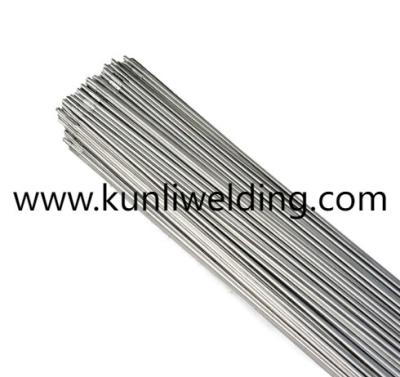
Welding Aluminum presents unique challenges that extend beyond simply achieving fusion between base materials, with crack sensitivity standing as one of the most problematic issues fabricators encounter during joining operations. Certain Aluminum alloy combinations prove notoriously difficult to weld using conventional filler materials, often developing hot cracks during solidification that compromise structural integrity. Aluminum Welding Wire ER4943 emerged as a solution specifically formulated to address these cracking issues through its unique silicon content that modifies solidification behavior. Understanding which base alloys benefit from this specialized filler wire helps fabricators avoid the frustration and costly rework associated with crack prone welding scenarios.
Heat treatable Aluminum alloys in the six thousand series represent primary candidates for this filler material. These magnesium silicon alloys achieve their strength through precipitation hardening but present welding challenges due to their wide solidification temperature ranges. During cooling, the interval between liquidus and solidus temperatures creates conditions where thermal contraction stresses can tear apart the partially solidified weld metal. The silicon rich composition of this specialized wire narrows the solidification range, reducing the time window during which the material remains vulnerable to hot cracking. Fabricators working with architectural extrusions, automotive structures, and general purpose sheet materials from this alloy family find that using this wire dramatically reduces cracking compared to traditional magnesium rich fillers.
Casting alloys containing both silicon and magnesium benefit significantly from this filler wire's chemistry. Cast components often require repair welding to address porosity, dimensional errors, or service damage. Many foundry alloys exhibit severe hot cracking susceptibility when welded with standard filler materials due to their complex solidification sequences and susceptibility to liquation cracking in the heat affected zone. The balanced silicon to magnesium ratio in this wire creates a eutectic composition that solidifies more uniformly, minimizing the formation of low melting point grain boundary films that promote crack initiation. Repair operations on engine blocks, transmission housings, and industrial equipment castings become more successful when this specialized filler replaces conventional options.
Dissimilar Aluminum alloy joining scenarios present some of the most challenging welding situations, particularly when combining alloys from different temper designations or composition families. Mixing non heat treatable and heat treatable alloys creates galvanic potential differences and thermal expansion mismatches that stress weld zones. Joining sheet materials to extrusions or castings compounds these challenges with geometric constraints and varying thickness sections. The versatile chemistry of this filler wire provides adequate compatibility across these dissimilar combinations, serving as a universal solution that eliminates the need to stock multiple specialized filler materials for various base metal pairings. Fabrication shops handling diverse projects appreciate this consolidation of inventory while maintaining crack resistance across varied material combinations.
Thin gauge materials present unique welding challenges where heat input control becomes critical for preventing burn through while still achieving adequate fusion. The improved fluidity that silicon additions provide allows this wire to wet out quickly and flow into joint gaps, enabling successful welding with reduced heat input compared to higher magnesium fillers. Sheet metal fabrication for transportation equipment, consumer products, and architectural panels benefits from this improved weldability on thin sections where traditional fillers might require excessive heat that causes warping or breakthrough.
Age hardened tempers create additional complexity because the welding thermal cycle partially anneals the base metal adjacent to the weld, creating a softened zone with reduced strength. While post weld heat treatment can restore properties, the as welded condition often must provide adequate strength for handling and assembly operations. This filler wire produces weld metal with mechanical properties that minimize the performance gap between the weld zone and unaffected base metal, reducing reliance on post weld heat treatment to achieve acceptable joint strength. Applications requiring immediate load bearing capability after welding benefit from this characteristic.
Crack sensitive repair scenarios on existing structures often involve unknown base metal compositions, previous repair attempts using incompatible materials, and complex residual stress patterns from prior service loading. These repair conditions create elevated cracking risk even with base alloys that would normally weld successfully using conventional fillers. The crack resistant nature of this specialized wire provides a safety margin in these uncertain situations, improving success rates for emergency repairs where failure would cause extended downtime or safety hazards. Maintenance operations on industrial equipment, infrastructure components, and transportation vehicles rely on this added crack resistance when repair conditions cannot be optimized.
Corrosion considerations sometimes influence filler selection beyond simply achieving crack free welds. The silicon bearing composition affects the electrochemical potential of weld metal relative to surrounding base material. In applications involving dissimilar alloy joining, this filler often produces weld metal with intermediate corrosion potential that minimizes galvanic current flow between parent materials. Marine environments, chemical processing equipment, and outdoor structures benefit from this balanced corrosion behavior that reduces preferential attack at weld locations.
Anodizing response differs from magnesium rich fillers, with silicon bearing compositions producing characteristic color variations after surface treatment. Applications where welds will be visible after anodizing must consider whether the color contrast between weld and base metal creates unacceptable aesthetic issues. Some fabricators intentionally use this color differentiation for quality control marking, while others view it as a cosmetic defect requiring additional finishing operations.
The specialized nature of this filler wire makes it valuable for specific problematic alloy combinations while potentially being unnecessary for readily weldable materials that perform adequately with conventional fillers. Understanding these application boundaries helps fabricators deploy this material strategically rather than universally, optimizing both performance and material costs. Comprehensive guidance on Aluminum alloy compatibility and specialized welding wire selection can be accessed at https://kunliwelding.psce.pw/8hpj2n for fabricators addressing challenging material combinations.