Notifications

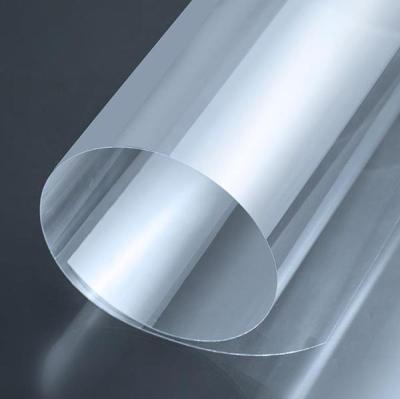
In many industries where transparency, toughness, and processing adaptability are essential, thermoplastic films play a crucial role in enabling both functional protection and visual presentation. Among modern polyester materials, MSD PETG Film has become an important solution for manufacturers seeking a combination of clarity, durability, and fabrication flexibility. Offered through Shanghai MSD International Trade Co., Ltd., this glycol-modified polyester film is widely used in packaging design, graphic displays, industrial protection, and electronic components where performance consistency and optical quality are both required.
PETG film originates from polyethylene terephthalate that has been chemically modified by introducing glycol during polymerization. This modification interrupts the crystallization behavior typical of conventional PET, preventing the formation of rigid crystalline regions within the polymer structure. As a result, PETG remains largely amorphous after cooling, giving the material excellent optical transparency and allowing it to maintain flexibility under mechanical stress. This structural property enables PETG film to resist cracking or whitening during bending, trimming, or forming processes, which is particularly valuable in applications where the material must be shaped into complex forms while maintaining visual clarity.
The manufacturing of PETG film relies heavily on precision extrusion technology and strict material preparation procedures. PETG resin pellets must first undergo a controlled drying process to remove moisture that could degrade polymer chains during melting. Once dried, the resin enters a single-screw or twin-screw extruder where gradual heating transforms it into a homogeneous melt. The molten polymer is then pushed through a precision slot die to form a continuous sheet. Immediately afterward, the sheet passes through a set of chilled rollers that rapidly cool the material and lock in its transparent structure. Maintaining uniform cooling conditions is critical to avoiding internal stresses or optical distortion. Shanghai MSD ensures that these production parameters are carefully monitored through quality control systems that verify thickness uniformity, surface smoothness, and mechanical consistency.
A notable advantage of PETG film is its excellent thermoforming capability. When heated within the appropriate forming temperature range, PETG softens evenly and can be shaped into detailed molds using vacuum forming or pressure forming equipment. The material’s broad forming window allows manufacturers to produce complex packaging structures with minimal risk of tearing or uneven thickness distribution. Because PETG retains its transparency even after forming, it is commonly used for clear blister packaging, clamshell containers, and display housings that require direct visibility of the product.
Another key feature of PETG film is its compatibility with decorative and graphic printing processes. The smooth surface of the film offers good ink adhesion for various printing technologies, including UV printing, digital inkjet printing, and screen printing. These characteristics allow designers to apply vivid colors, high-resolution images, and brand elements directly onto the film. In addition to printing, PETG film can also be laminated with decorative layers or protective coatings to enhance scratch resistance, improve surface hardness, or provide anti-static functionality. Such modifications expand the material’s suitability for retail displays, signage panels, and product packaging where both appearance and durability are important.
Mechanical performance is another factor that contributes to the widespread adoption of PETG film. Compared with many rigid transparent plastics, PETG demonstrates superior impact resistance and ductility. The material can absorb mechanical shocks without fracturing, which makes it particularly useful for protective covers, equipment guards, and packaging for fragile items. The film also performs well under moderate bending and flexing conditions, allowing it to be used in applications that require both rigidity and resilience.
Performance verification is essential for ensuring the reliability of PETG film in commercial applications. Optical testing instruments measure light transmission and haze values to confirm that the film meets clarity requirements. Mechanical testing evaluates tensile strength, elongation at break, and impact resistance to ensure the material can withstand processing and operational stresses. Thermal analysis techniques are used to determine glass transition temperature and thermoforming performance, while environmental testing assesses resistance to humidity, ultraviolet radiation, and temperature changes that may occur during long-term use.
Chemical resistance further enhances the versatility of PETG film. The material can tolerate exposure to many household cleaning agents, oils, and mild industrial chemicals without losing transparency or structural integrity. This characteristic makes PETG film suitable for laboratory equipment covers, protective shields, and display enclosures where regular cleaning or chemical contact may occur. The film’s ability to maintain clarity even after repeated exposure to such conditions supports its use in environments requiring consistent visual inspection.
In addition to technical performance, sustainability considerations are increasingly influencing material selection in modern manufacturing. PETG film can be incorporated into certain recycling streams and is often produced with optimized thickness profiles that reduce material consumption while maintaining strength. Production processes may also include energy-efficient extrusion systems and waste reduction practices. Shanghai MSD works with supply partners to support these environmentally responsible approaches while ensuring reliable product quality.
With its unique balance of optical clarity, thermoforming capability, mechanical strength, and processing flexibility, PETG film continues to expand its role across industries such as packaging, electronics, retail displays, and industrial protection systems. Engineers and designers rely on materials like PETG to create transparent components that combine aesthetic appeal with functional performance. Professionals interested in further understanding the technical differences between PETG and traditional PET films can explore additional insights and comparisons at https://www.shanghaimsd.com/news/petg-film-vs-pet-film-what-are-the-key-differences.html .